

Catholic Workers Resist State Occupation
A Haitian father on why his family needs asylum in the United States; London Catholic Workers find the power of silence on the picket line and at home; Jim Forrest on Dorothy Day, saintly troublemaker
“From Minnesota to Palestine, occupation is a crime”
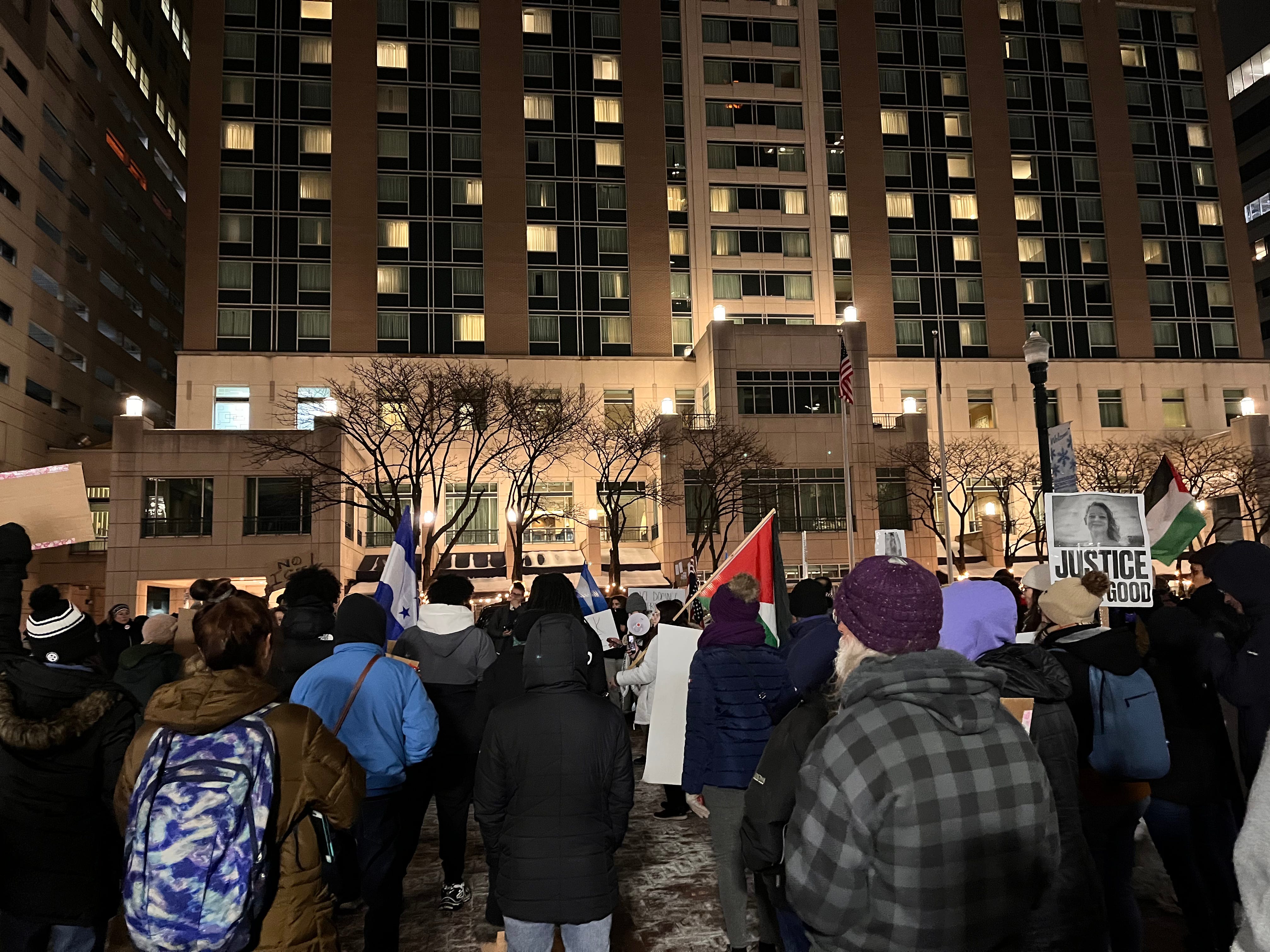
On Tuesday, more than a hundred protestors gathered outside our city government office here in Harrisburg, Pennsylvania, to demand an end to municipal cooperation with ICE.
The rally, organized by our Harrisburg solution for Palestine, emphasized the common structural sin of occupation that have afflicted both immigrant communities in the United States and indigenous communities in Palestine.
In Minnesota, children have been reported missing and found in ICE custody. ICE has asserted the right to enter citizens’ private homes without a warrant. Even as human rights violations and extrajudicial killings in Minnesota have captured our national attention and prompted widespread condemnation, the same crimes have continued in Palestine. In Gaza, Israeli air strikes continue: an airstrike this week killed at least one paramedic and five children, according to the BBC. According to Unicef, 11 children have died of hypothermia or “wet tent syndrome” this winter, as three-fourths of Gaza‘s population are displaced and wintering in tents.
These humanitarian crises: the state’s utter disrespect for a person’s human rights, life, and dignity, is a sign of state occupation. Those who are most harshly targeted are—like M., whose story is told below—are those already on the margins. In the U.S., those who have been the victims of this lawless terror have been those who are already fleeing chaos and danger in their homeland, who have come to the U.S. seeking the security of a country based on due process and fairly applied laws. M.’s story of fleeing Haiti highlights the human cost of the legal and social chaos—the lengths he has gone to reach here and the innocent lives at stake.
The London Catholic Workers’ articles—from the Christmas 2025 newsletter, and shared in Friday’s CW Reads—offer the wisdom of the “noisy Gospel” of decrying injustice, proclaiming a silent “no,” to the bankrupt social order of violence and occupation and the new world we create when practicing real, patient, person-centered love in community.
peace,
Renée

Please consider giving a donation to Roundtable by becoming a “paid subscriber” to support our work. Roundtable will always be free for all to read, but we are able to do this work because of the generosity of our paid subscribers. Less than 10% of Roundtable subscribers are paid subscribers, and their contributions make it possible for us to share this work with thousands.
Donations to Roundtable pay the housekeeping fees of catholicworker.org, keeping a valuable resource for the movement online. Your contributions also offer financial support to the community of our editor, St. Martin de Porres House in Harrisburg, Pennsylvania. You can learn more about the work that St. Martin de Porres House does to support immigrants, refugees, and the community of Allison Hill on its Facebook, website, or at The Personalist.
Thank you for reading Roundtable and for your support of its mission of spreading news by and about the Catholic Worker movement.
FEATURED
CW Reads: A Father on Why His Family Fled Haiti
On Monday, U.S. District Judge Ana Reyes in Washington, D.C. ruled that Kristi Noem’s Department of Homeland Security lacked the statutory authority to unilaterally end Temporary Protected Status (TPS) for Haitian nationals living in the United States. TPS was set to expire for Haitians on Tuesday, which would have ended legal protections for more than 350,000 Haitian migrants and refugees living in the United States. Judge Reyes’ decision came on Monday, offering an eleventh-hour reprieve that community leaders said was welcome, but not a sustainable solution. Because TPS was set to end, and with it their work authorizations, some Haitians have already lost their jobs.
TPS is a temporary status that allows a person fleeing a violent and unstable situation to work and live in the United States, but does not allow a path to citizenship. In 2023, the Biden administration created a humanitarian parole program for Cubans, Nicaraguans, Haitians and Venezuelans (the CHNV program). It allowed migrants fleeing those countries a two-year parole in the United States while they sought asylum or family-based immigration.
Haiti is still classified as Level Four on the U.S. State Department’s website travel advisory, which warns U.S. citizens not to travel, out of fear for their life and safety. The United Nations estimates that 6 million Haitians—roughly half the country—are in need of humanitarian aid, including 3.3 million children.
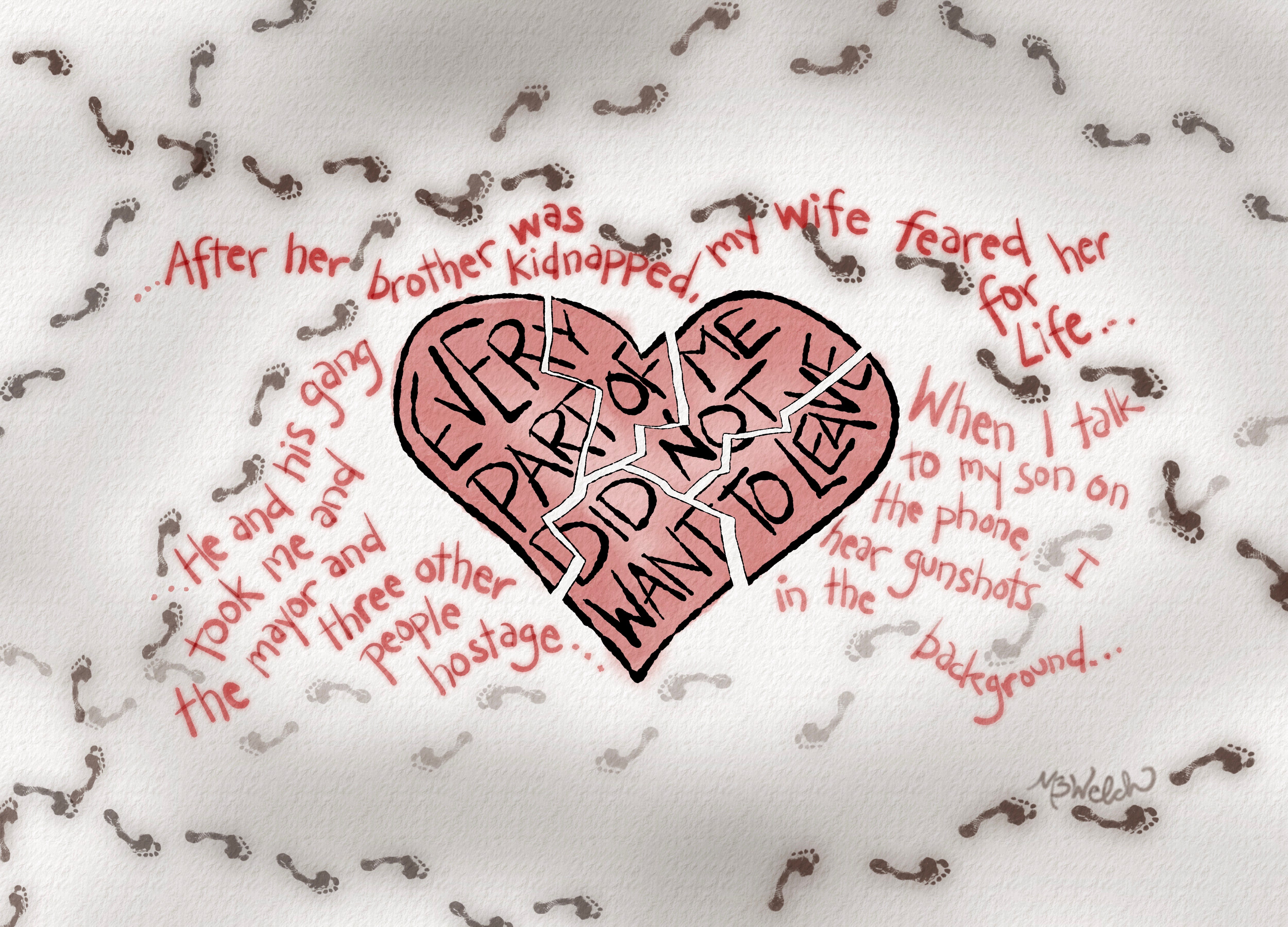
Our friend M. shared his story of fleeing from Haiti in Thursday’s CW Reads. He said when he talks to his son, who is still in Haiti, he hears gunshots in the background. He summed up his feelings on the tenuous situation of Haitian immigrants here in the U.S.:
I would love to go back to Haiti. If that is what it comes down to, I’ll do it, but I wish I were returning to a stable country, a country with justice and stability and security. I am less concerned about myself than I am for my nine-year-old daughter.
Read M’s full story on CW Reads here.
CW Reads: London Catholic Workers on Community
In Friday’s CW Reads, Naomi Orrell, a London Catholic Worker community member, wrote a reflection on her experiences of protesting:
If we have ever met at a protest, you will know that I love making a bit of a ruckus. If someone jumps on the megaphone or starts singing a Billy Bragg song, I will be there singing it at the top of my lungs.
While protest can take many forms, an essential part of protest for me is to be disruptive, to be in a physical space and claim ownership of it. But this is not without its limitations; we (and I include myself in this) can be guilty of making noise for noise’s sake. Speaking from personal experience, sometimes the most disruptive protest can be entirely silent.
I have been thinking a lot about how we occupy this physical space, particularly as Christians. In particular, what is the role of Christians in those spaces? Are we there to bring peace, to simply be there as a sign of solidarity with the cause, making the other protesters know that we are “not like other Christians”? Is it enough for us to just be there, or do we also need to be willing to be disruptive?
James Catterson wrote about the lessons learned from life in community.
Living in community asks you to think of mercy regularly. Living with multiple other people means your edges will rub up against other’s edges. I often have to choose to show grace – to choose to be forgiving and not hold a grudge, to choose to still be kind when I’m agitated, to accept it when I can’t have my preferred way.
Living in community means that you need to make time in your week to do something on your own, or something that is just yours. Going for a few runs during the week is something that is solely mine. I am alone, I am moving my body, I am seeing different houses and different people, I am breathing deep breaths.
Read both James and Naomi’s essays here.
From CW.org: The Trouble With St. Dorothy
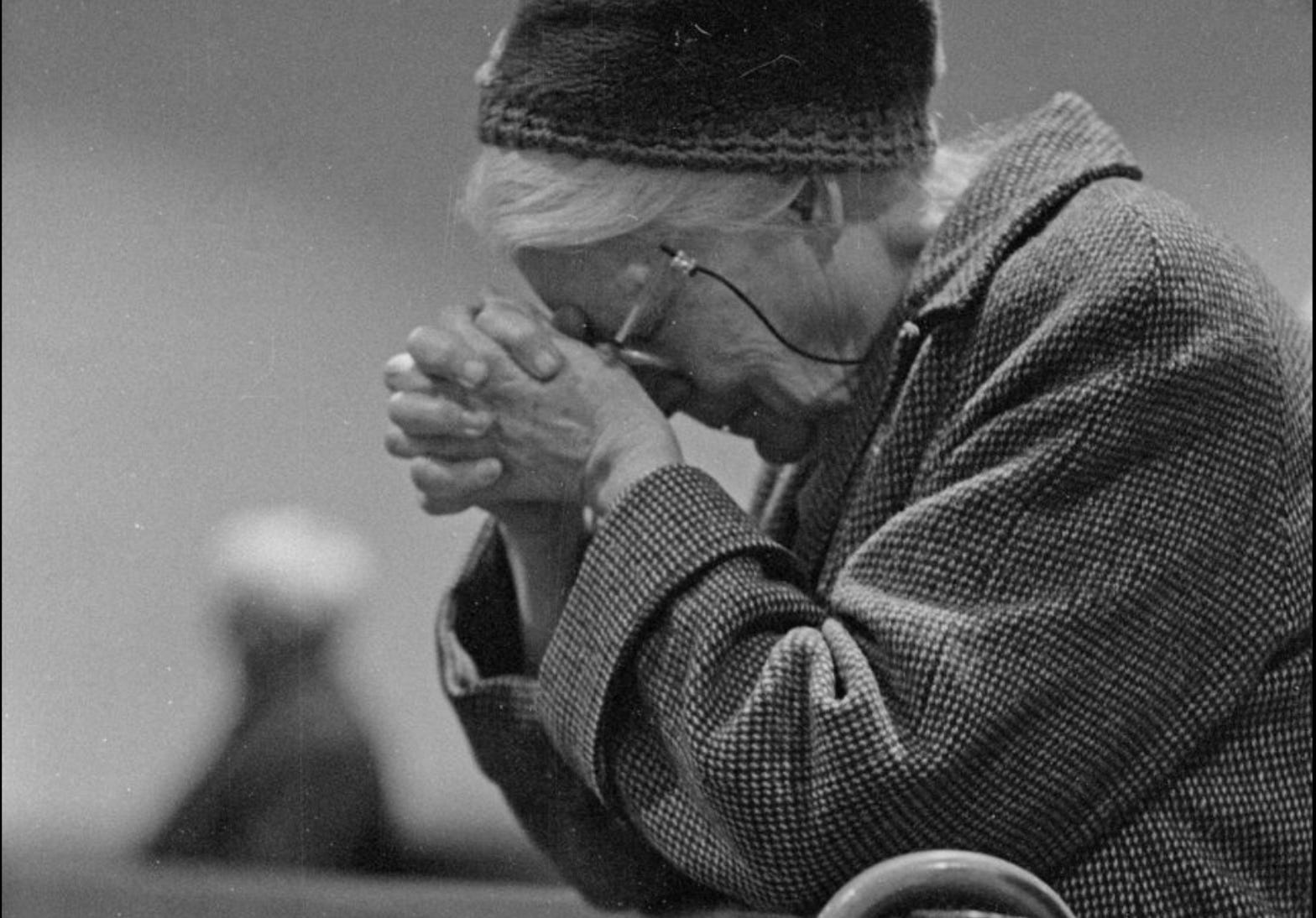
CatholicWorker.org recently shared the full text of an article that Jim Forrest originally wrote for the November 1997 issue of U.S. Catholic, about his encounters with Dorothy Day as a young man. He wrestles with the full figure of Dorothy—saint and troublemaker. “Can you think of a word that describes a person who devoted much of her life to being with people many of us cross the street to avoid?” he writes, “Who for half a century did her best to make sure they didn’t go hungry or freeze on winter nights? Who went to Mass every day until her legs couldn’t take her that far, at which point Communion was brought to her?” What about the word for a person “who refused to pay taxes, didn’t salute the flag, never voted, and went to prison every now and then for protests against war and social injustice?”
He writes:
I was 20 years old the first time I saw her. She was ancient, that is to say 62 years old—seven years older than I am today. This means for 35 years she has been scolding and encouraging me on a daily basis. The mere fact of her having died 17 years ago doesn’t seem to get in the way.
I met her at the Catholic Worker Farm on Staten Island in the days when the island still had rural areas, its only link to the rest of New York City being the ferry. She was sitting with several other people at the battered table where the community had its meals. Before her there was a pot of tea, a few cups, and a pile of letters.
The Catholic Worker received a good deal of mail every day, much of it for Dorothy. She often read the letters aloud, telling a story or two about the people who had written them.
This was the Dorothy Day University in full swing, although I didn’t know it at the time. A good part of Dorothy’s life was spent reading and writing letters; even her monthly columns were usually nothing more than long letters. She will be one of the patron saints of letter writers.
People sometimes think of her as the personification of the simple life, but in reality her days tended to be busy, complicated, and stressful. Often she was away traveling—visiting other Catholic Worker communities, speaking at colleges, seminaries, local parishes, getting around by bus or a used car on its last spark plugs.
It was an unforgettable experience hearing her before an audience. She had a direct, unpremeditated, story-centered way of speaking—no notes, no rhetorical polish, a manner that communicated a certain shyness but at the same time wisdom, conviction, faith, and courage. She wasn’t the kind of speaker who makes those she is addressing feel stupid or without possibilities.
Her basic message was stunningly simple: We are called by God to love one another as he loves us. (These days many of us go to great lengths to avoid saying he in such a sentence, but Dorothy steadily resisted a gender-neutral vocabulary).
If God was one key word, hospitality was another. She repeated a saying from the early church, “Every home should have a Christ room in it so that hospitality may be practiced”.
Hospitality, she explained, is simply practicing God’s mercy with those around us. Christ is in the stranger, in the person who has nowhere to go and no one to welcome him.
“Those who cannot see the face of Christ in the poor are atheists indeed,” she often said. Hardly a day passed when she didn’t speak about the works of mercy.
Read the full article here.
COMMUNITY NEWS & NEWSLETTERS
Catholic Worker Farm Gathering is This Upcoming Weekend
The Catholic Worker Farm Gathering begins this Friday, February 13 at Anathoth Farm in Luck, Wisconsin. This gathering will mark 90 years of Catholic Worker farms.
The festivities begin Friday afternoon, with prayer, dinner and a public talk by Brenna Cussen Anglada on Palestinian resistance and her visit to the West Bank in October. Bring your instruments for the Friday night social and Saturday’s square dance!
Saturday will feature a keynote address, a panel discussion—panelists will address hospitality on farms, ICE and immigration, and “sacramental agriculture”—and roundtables throughout the afternoon. The formal programming ends on Sunday morning, but participants can choose to stay on for an annual Danish festival of Fastelavns on Sunday evening and a Monday visit to Minneapolis to pray at the sites of contemporary Minnesota martyrs—George Floyd, Renee Good, and Alex Pretti.
For more information, visit the farm gathering page at CatholicWorker.org.
New Edition of the Catholic Agitator
The February edition of The Catholic Agitator is dedicated to grappling with one of the most inflated, feared, hyped—and seemingly inescapable—social problems of the day: artificial intelligence. Matt Harper’s opening essay warns about the environmental impact of AI, its detrimental impact on labor and work, and the “cultural colonization” it perpetuates. Justin Claraval, SJ, shares a story of tasting a false transcendence while using AI; and Jeff Dietrich highlights the thought of Christian anarchist Jacques Ellul as a guide through the new technological age. Two co-authors of an article on the “powers and principalities” of large language models ask:
Can AI be bound? Can it be tethered to a Wisdom concerned for the whole of the biosphere and geosphere combined? Can a principality return to being an angel? For 5,000 years our technologies have become ever more captive to a narrowness ruthlessly committed to externalizing the costs. But now there are no external domains left: no untouched places remain to dump the waste in. If we as humans cannot find the wisdom to bind ourselves, do we really think AI will do such?
Read the full issue online here.
Cherith Brook Shelters the Cold
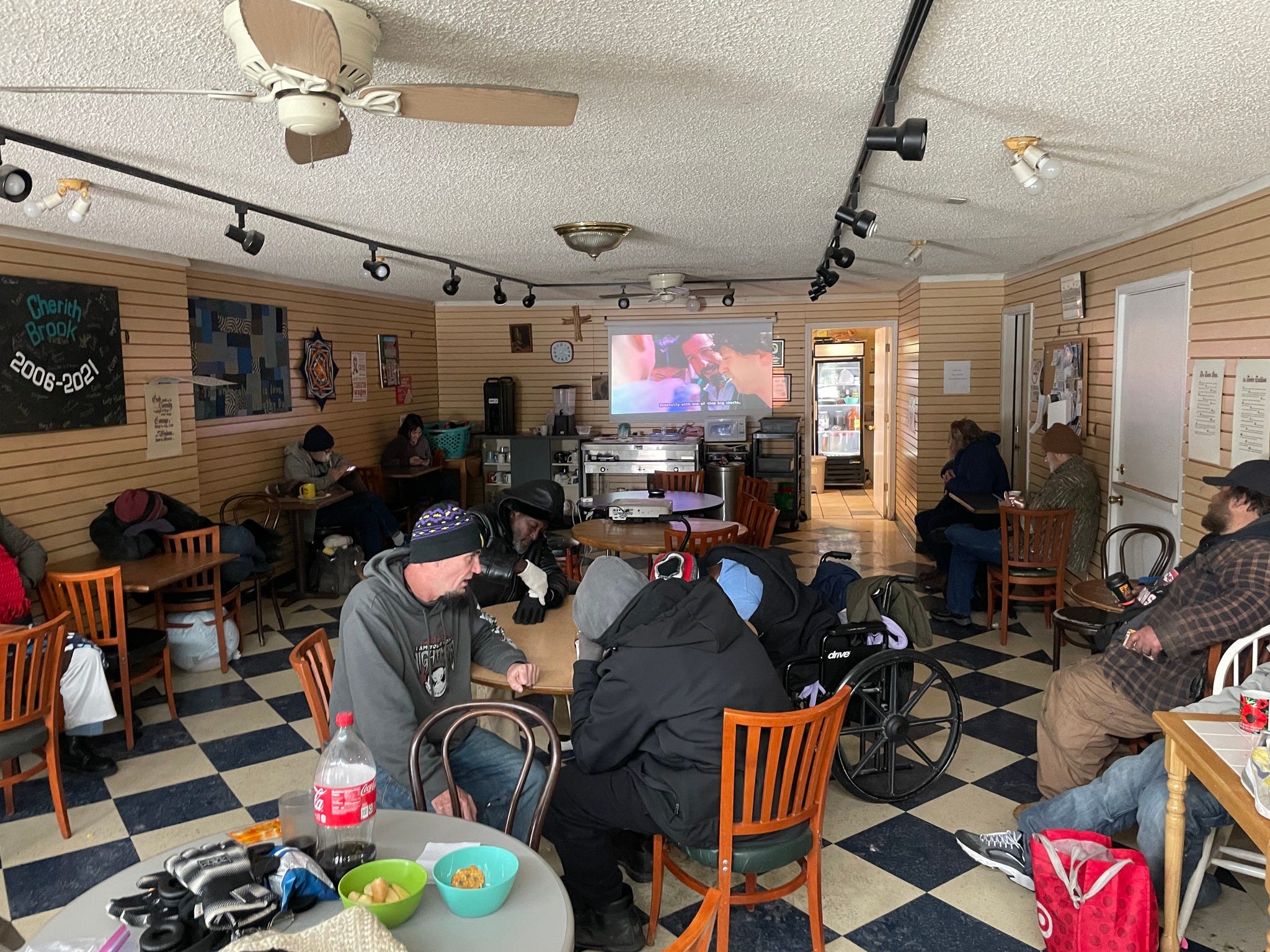
Catholic Workers throughout the country have been responding to the arctic temperatures blowing through the United States. Cherith Brook Catholic Worker (Kansas City, Missouri) opened its doors last weekend during the winter spell to offer heat, snacks, and warm drinks to the homeless in need of shelter. See more on their Facebook page.
In Memoriam: Emmaus House Founder Dies in Albany
Walter Chura, one of the founders of Emmaus House in Albany, passed away on Sunday, January 18. Read Walter’s full obituary online here and read more about Emmaus House on their website here.
A Need: Casa Maria’s Wish List
A recent edition of Casa Cry, the newsletter of Casa Maria (Milwaukee, Wisconsin) included a request for in-kind donations for the four houses of Hospitality:
39-gallon of garbage bags, laundry detergent, cleaning supplies, bleach, Milk (esp. shelf stable milk), pasta sauce, dish soap, pizzas, paper towels, and toilet paper.
To donate, visit their website.
CW IN THE MEDIA
St. Louis Catholic Worker Featured on Public Radio Site
Lindsey Myers and Theo Kayser were featured on STLPR, St. Louis’ Public Radio Site, as they marched with hundreds of others to protest Enterprise Rent-a-Car’s profiting from ICE agents renting their vehicles. Read the story online here.
Wichita Catholic Worker on Ending the Death Penalty
Jeromiah Taylor, a Catholic Worker in Wichita, Kansas, reported a story for U.S. Catholic on bipartisan support for ending the death penalty. He covered the Kansas Coalition Against the Death Penalty’s (KCADP)’s 2025 conference, which addressed the problem of the death penalty as a pro-life issue. Its panelists, he reported, included Republican Kansas State Rep. Bill Sutton and Nan Tolson, the executive director of Texas Conservatives Concerned About the Death Penalty (CCATDP). “The organization as a whole has had to learn how to operate in that dynamic,” Donna Schneweis, chair of the coalition, told Taylor. “It has been an opportunity to show a path forward toward dialogue and collaboration on issues.” Read the article here.
Former Catholic Worker House Used as Homeless Shelter
A former Catholic Worker House in Champaign, Illinois, is now home to a tent encampment. Residents of the “Safe Haven” in the former Catholic Worker house’s backyard have been battling the “criminalization” of homelessness and finding surprising amounts of support, as a recent city ordinance to ban public camping failed. Read more about the story here.
The State Is Punishing Solidarity, According to Tribal Historian
Nick Estes, a historian at the University of Minnesota and a member of the Sioux Tribe who has written about the Standing Rock protests against the Dakota Access Pipeline, cited Catholic Worker Jessica Reznicek’s imprisonment as an example of the state’s “war on solidarity.” Estes noted Reznicek was labeled a domestic terrorist, while January 6 rioters at the Capitol Building did not get terrorism charges. “I think that largely has to do with the fact that [Reznicek] was in alliance with Indigenous water protectors,” Estes told The Guardian. Read the full story here.
Black Catholic Messenger Calls on NY Archbishop to Visit the Catholic Worker
Félix Cepeda, an organizer in New York and a contributor to Black Catholic Messenger, wrote a public letter to New York City’s new bishop, Archbishop Ronald Hicks, who was installed on Friday, offering him advice for getting to know the diverse local communities of Catholics of New York City.
“He should also visit both of the Catholic Worker communities in Manhattan and pray in the chapel at Maryhouse, the former home of Servant of God Dorothy Day,” Cepeda recommended. Read his full “local guide” here.
Catholic Worker Author Jim Douglass Speaks on Podcast
Jim Douglass, Catholic Worker and author of the new book “Martyrs to the Unspeakable: the Assassinations of JFK, Malcolm, Martin and RFK,” appeared on Shane Claiborne’s Red Letter Christians book club podcast. Douglass’ book tells the story of how warriors for justice were viewed as enemies of the state. Their stories can provide lessons for those fighting for justice today. Listen to the conversation here.
MARK YOUR CALENDAR
“Eco Embertides” in Lancaster on Saturday
Lancaster, Penn. — The Rechabite Catholic Worker invites all to Spring Embertides on Saturday, Feb 28th at 11 a.m. at St. Joseph Catholic Church in Lancaster. They write:
This Spring season, we invite you to the ancient tradition of the “Embertides” (seasonal days of prayer and penance). Based on the spirituality of Saint Francis, this devotion praises God for the glory of Creation and begs deliverance from natural disasters caused by our ecological sins.
Note: There will be free copies of Pope Francis’ 2013 encyclical, Laudato Si’, available for attendees.
Upcoming Retreats at Kirkridge Retreat Center
Bangor, Penn.— The following retreats at Kirkridge Retreat Center could be of interest to Catholic Workers and friends.
Damned Whiteness: How White Christian Allies Failed the Black Freedom Movement and How We Can Do Better, February 27 to Mar 1
This retreat for Christians in solidarity with the Black liberation struggle is based on the material from David F. Evans’s book by the same name. We will learn how some of our forebearers failed the Black Freedom Movement and how we can course correct. Learn more here.
Work Weekend, March 27 to 29
Enjoy a no-cost weekend at Kirkridge in exchange for contributing your hands and hearts to some work projects. All skills and abilities are welcome! Learn more here.
Bonhoeffer’s Conundrum and Ours: A Discernment Retreat, April 10-12
Dietrich Bonhoeffer has left behind a witness of a complicated and imperfect Christian response to fascism that can help us discern our own responses. Join us for a weekend of rich history-telling, mountain-walking, spirit-listening, song-lifting, and community-building. Learn more here.
Learn more about the center and other upcoming retreats on their website here.
WORDS FROM THE ELDERS
“To Die for Love”
by Dorothy Day, from the September 1948 issue of The Catholic Worker
There is a character in The Plague, by Albert Camus, who says that he is tired of hearing about men dying for an idea. He would like to hear about a man dying for love for a change. He goes on to say that men have forgotten how to love, that all they seem to be thinking of these days is learning how to kill. Man, he says, seems to have lost the capacity for love.
What is God but Love? What is a religion without love? We read of the saints dying for love and we wonder what they mean. There was a silly verse I used to hear long ago, “Men have died and worms have eaten them but not for love.” I have no idea where it comes from. And nowadays in this time of war and preparing for war, we would agree, except for the saints. Yes, they have died for love of God. But Camus’ character would say, ’’I mean for love of man.” Our Lord did that, but most people no longer believe in Him. It is hard to talk to people about God if they do not believe in Him. So one can talk and write of Love. People want to believe in that even when they are all but convinced that it is an illusion. (It would be better still to love, rather than to write about it. It would be more convincing.)
Read the full column online.