

Growing a Resilient Community at Dandelion Village
A community profile of Dandelion House, a Catholic Worker in Portland, Oregon, that draws on the resilient roots of an indigenous plant to create the new society in the shell of the old.


Portland, Ore.— On a quiet tributary of the Willamette River in Milwaukie, a southerly suburb of Portland, Oregon, a radical community grows on the banks of the creek.
Dandelion House is, more properly, a collection of houses. A friend of the community jokingly calls them an “empire,” they prefer the term “village,” but either way, the work is growing in not a dissimilar way to their namesake native plant, often maligned as a weed.
Fumi Tosu, the founder of the small dandelion patch, moved onto this wooded half-acre lot in 2022.
Tosu delved into the Catholic Worker history through teaching his students about Dorothy Day as a high school teacher. He felt a draw to something else, and quit teaching after seven years.
Tosu Catholic-Workered his way up the West Coast, first joining the movement at the Los Angeles Catholic Worker as a summer intern in 2011. He spent time at several different Catholic Workers—Beatitude House in Guadalupe, and Half Moon Bay Catholic Worker, a year at the Redwood City, —before landing at Casa de Clara, the home of the San Jose Catholic Worker.
Tosu, 48, spent nearly a decade (2012-2018) at the San Jose Catholic Worker. This new Catholic Worker began when he was living in Portland, and the Redwood City Catholic Worker had the opportunity to provide Tosu the seed money to start a new Catholic Worker community.
“I was looking for a space to do an urban house of hospitality, but I wanted to incorporate the ‘agronomic university,’” Tosu said in a Zoom call with Roundtable. The half-acre lot has allowed them the ability to do both.
Tosu and his first community members turned part of the sunny lot into an orchard. The main community house has offered long-term hospitality. The garage has a small guest room in it and holds the food pantry items for their Friday morning meals for the unhoused under Morrison Bridge in Portland.
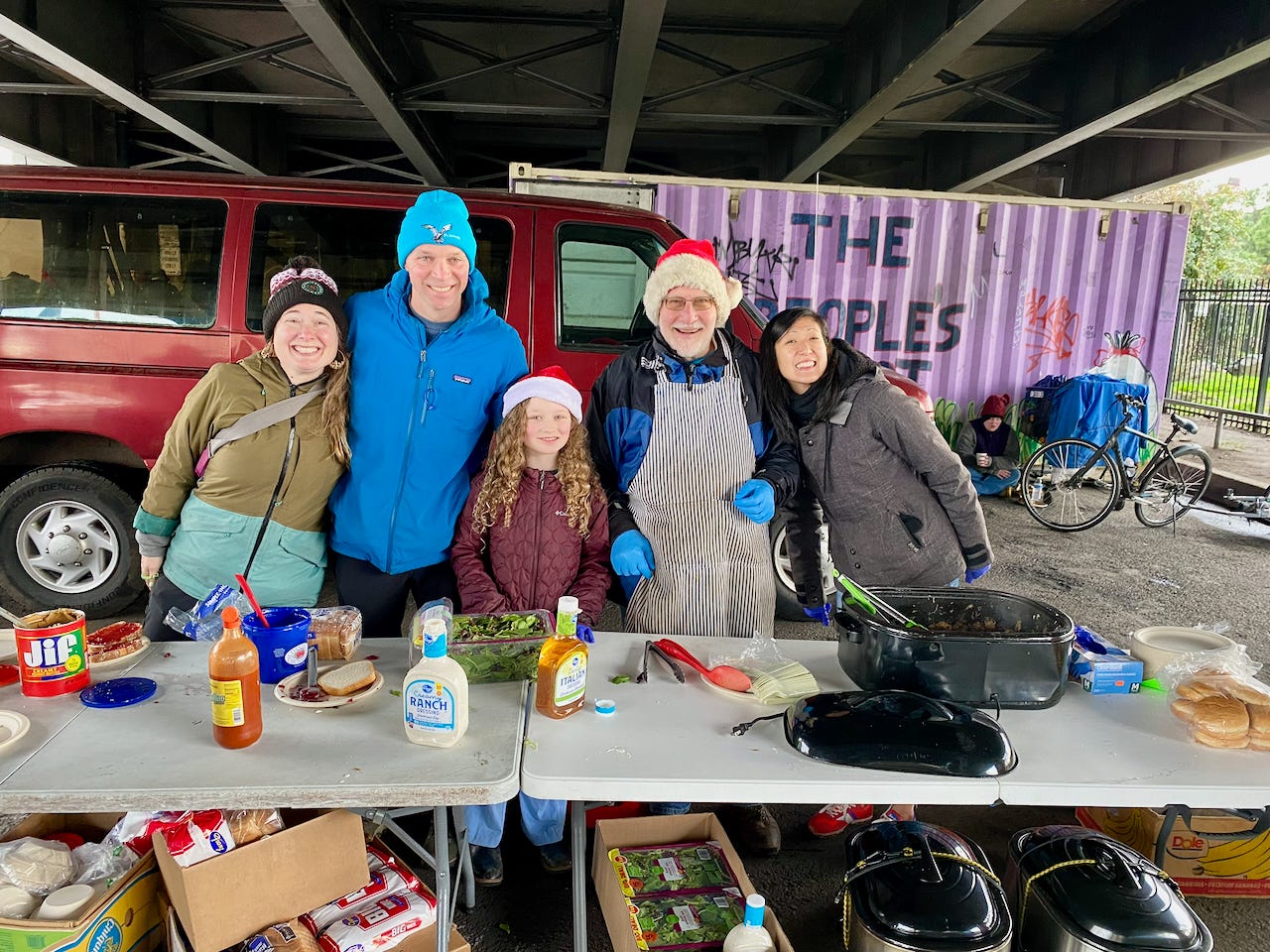
The first expansions of the village Lisa and Julian Washio-Collette moved into the community in 2023. Previously, they had been working with the Camaldolese Benedictine monks at the New Camaldoli Hermitage in Big Sur, California. “It allowed the inner monk to come alive,” Lisa Washio-Collette said in a Zoom call with Roundtable.
The couple remains oblates of that monastic community, meaning that they are committed to embracing the contemplative mode of existence and monastic rhythms of life.
“We have this aspiration to integrate and to live both of these charisms,” Washio-Collette said, “these spirits of the monastic, contemplative tradition and weaving together the activism, the prophetic voice of the Catholic Worker, serving those on the margins, really wanting to integrate and weave those two together.”
Being an oblate has a long tradition in the Catholic Worker movement. Their neighbors in Portland, the Simone Weil Catholic Worker, committed as oblates to Mount Saviour Monastery, a Benedictine Monastery on the outskirts of Portland, and prayed morning prayer with them for a while. Members of Nativity House Catholic Worker in Lockport, Illinois, are Benedictine Oblates at the same abbey, St. Procopius, where Dorothy Day was an oblate.
“I really resonate with Dorothy on this,” Washio-Collette said of the Day’s commitment to the Benedictine charism.
The Washio-Collettes met Tosu through a professor of his at the Jesuit School of Theology, Robert Hale, who was also a monk at New Camaldoli. They moved into Casa De Clara, the San Jose Catholic Worker, as a newly married couple. They lived in community together for three years, from 2015 to 2018. Lisa Washio-Collette recalled being struck by the depth of faith lived out at Casa De Clara.
“I remember being really inspired, like, ‘these folks are living it,’” Washio-Collette said.
The stories of the two communities are woven together, as Tosu and Lisa Washio-Collette served on the board of the San Jose Catholic Worker for a short time, and some practices from Casa de Clara have sprouted up in their new community.
For Tosu, he brought with him the wisdom that hospitality meant forming enduring, lasting relationships with guests, walking alongside them for the long haul.
“It’s not about housing a lot of people, but it’s about walking with people,” Tosu said, “it’s really important to me that we create authentic, long-lasting relationships that folks can call on us down the line.”
They also practice a communal discernment called “revision of life,” from the Verbum Dei Sisters in San Francisco, where they have tri-weekly “check-ins” about their spiritual, communal and personal well-being. They do evening prayer, a remnant of doing morning and evening prayer at Casa de Clara.
Although the Dandelion House is rooted in the Catholic Worker movement, it, like its eponymous plant, is a part of a whole ecology of influences.
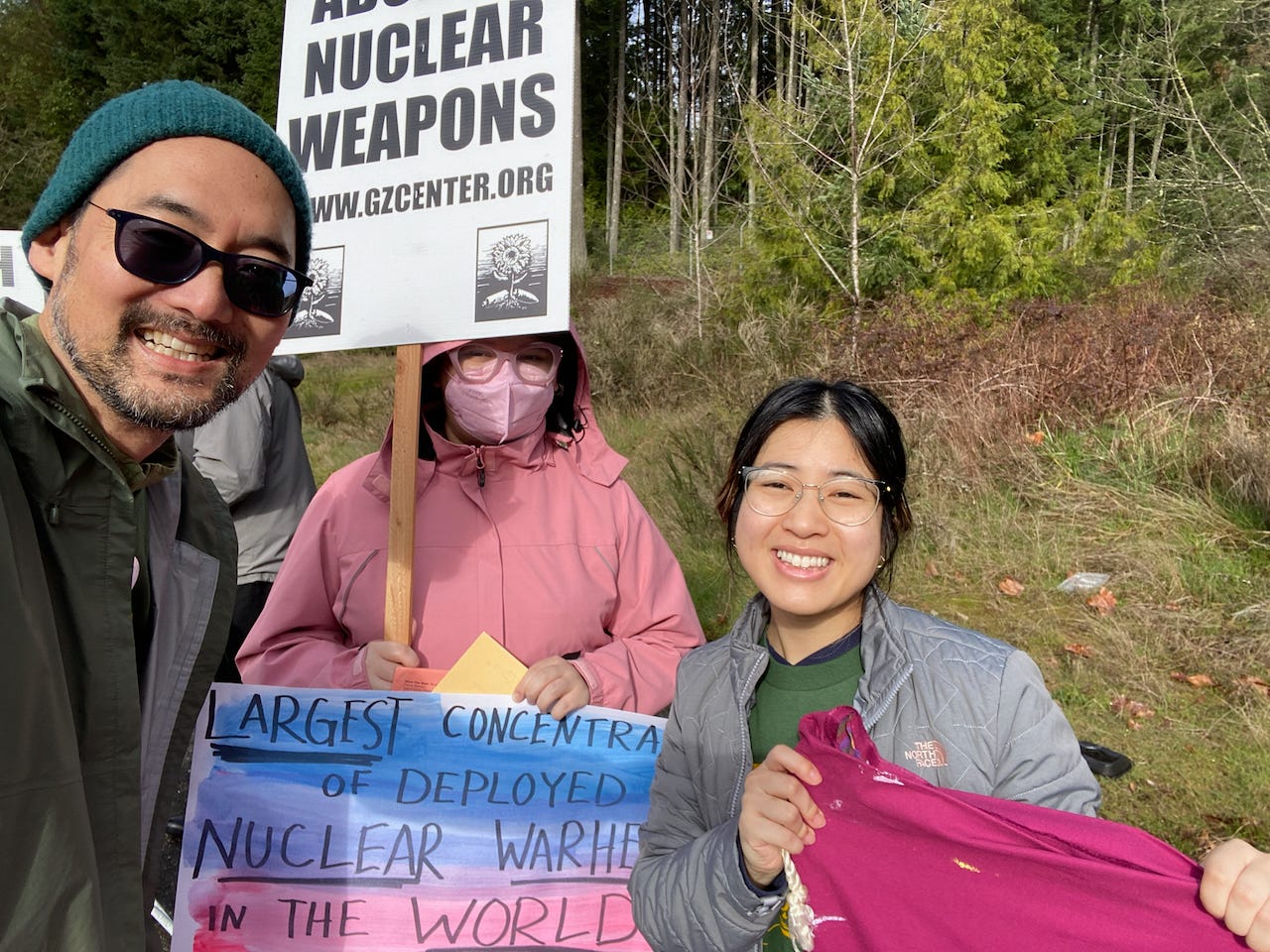
Indigenous Plant; Sacred Wisdom
Dandelion House, in its very name, honors indigenous American culture and forms of wisdom that have been marginalized. Although they are the only house named for the plant (and one of the very few houses named after any plant), they are far from the only Catholic Workers exploring the potential and possibilities of this mowed-down species.
Across the country, Little Platte Catholic Worker Farm dedicated a whole day in May to running workshops on foraging dandelions and making wine, medicine and food with them.
Dandelion House highlights the nutritional value of this much-maligned suburban weed as well. “A dandelion is nutritious and healing – the entire plant, from flowers to leaves to roots, can be used for food and medicine,” they write.
The Catholic Worker affinity for dandelions is perhaps a natural result of a “preferential option for the poor,” meaning that the work gives the most time, care, attention and resources to those who society shunts to the margins or dismisses as difficult, mentally ill or problematic.
“Often regarded as a weed, homeowners wage all manner of chemical and manual warfare against them,” the Dandelion House community’s website says, explaining their choice of emblem, “yet they inevitably re-emerge – on lawns, city sidewalks, and in wild meadows and fields.”
“We hope the house will be infused with the spirit of the dandelion – the spirit of resilience, healing, beauty, and play,” they wrote on their website.
“They’re so common, I see them everywhere, and that just makes me smile,” Tosu said, “they’ve become such an important part of my life.”
For Washio-Collette, the dandelion is a symbol of resistance and healing, a potent metaphor for these times. Tosu recalls a slogan on a t-shirt with a dandelion on it: “grow without permission.” The dandelion also has a connection to Brigid in ancient Gaelic folklore, as it is one of the first flowers to appear after her feast day in February, as the days begin to grow lighter. Just as the dandelion, in one tale, guided Brigid to Nazareth, Washio-Collette felt Brigid was guiding their own discernment to the house.
Each month, the community hosts a Cosmic Liturgy of the Divine Feminine to worship the divine using feminine images and to honor these lineages of religious wisdom marginalized by patriarchal forms of religion.


The Dandelion: a Mascot of Resistance
Tsuru for Solidarity—translated as “the cranes for solidarity”—brings together the survivors and descendants of the Japanese-American internment or incarceration experience during World War II to call for an end to repeating history. The group is dedicated to observing and protesting what’s happening with migrants today. With them, Washio-Collette is planning a peace pilgrimage walk in Portland honoring Japanese-American sites in Portland.
Before Japanese-Americans were sent to the camps, they were sent to Assembly centers. The Tsuru for Solidarity will start their peace pilgrimage at the site of a former assembly center and will also stop at the Portland ICE facility to call for an end to child and family detention.
“I have to speak up,” Washio-Collette said of this historical moment. She meditates on Bob Fitch’s 1973 photograph of Dorothy Day amid the striking farmworkers for strength and inspiration.
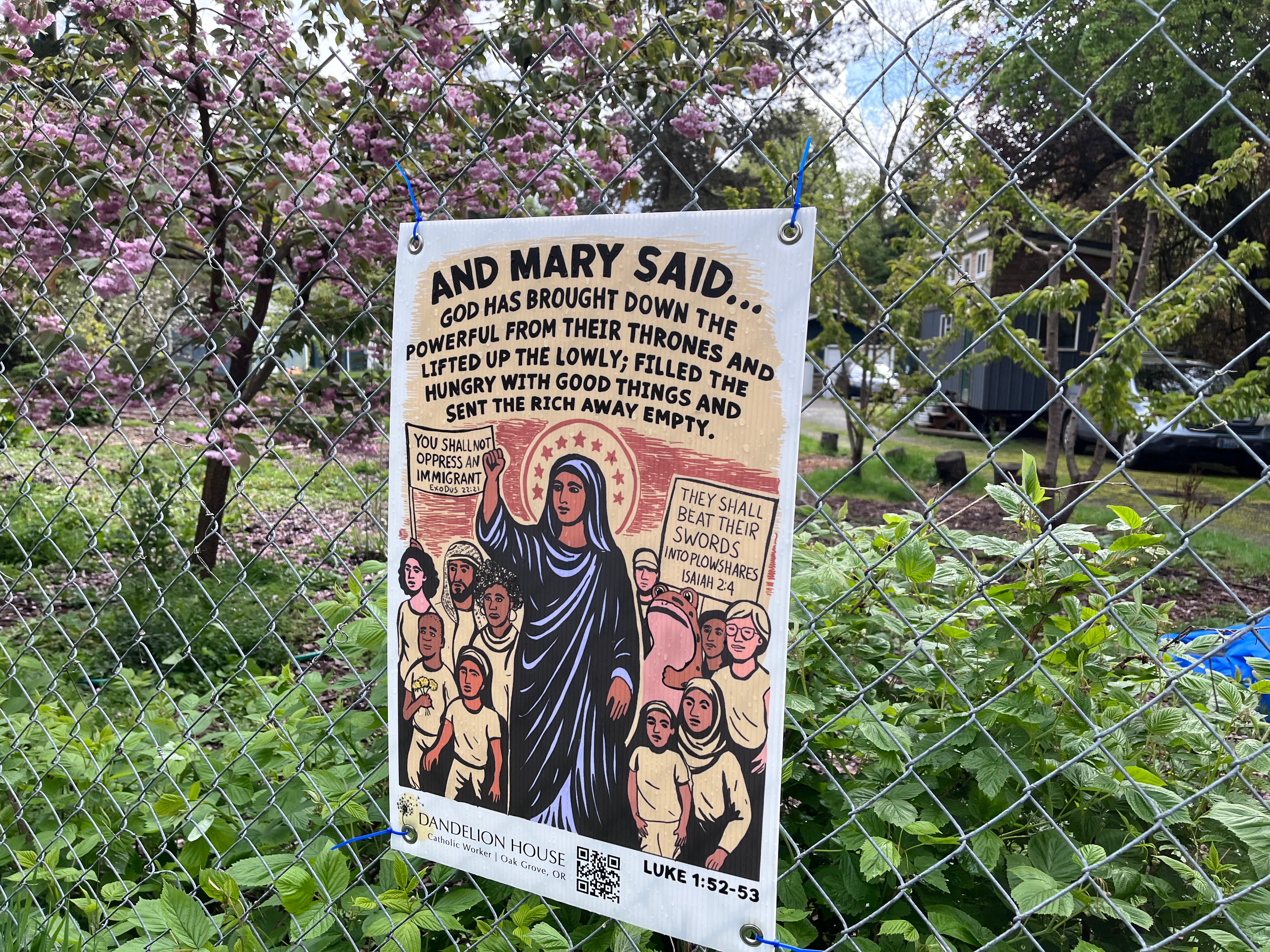
Tosu grew up in Tokyo, Japan, before he came to the United States at the age of 17 to study at Amherst College in Massachusetts.
Tosu’s identity as a second-generation hibukasha, or “bomb-impacted” person, has fueled some creative activism. His father, Norimitsu Tosu, was. three when the U.S. dropped an atomic bomb on his hometown of Hiroshima.
In 2025, Tosu worked with The Hearth and Austin Story Project to create a creative Fierce Nonviolence Pilgrimage to commemorate the 80th anniversary of Hiroshima and Nagasaki that passed down the tradition of nonviolent resistance to a new generation.
His goal in the pilgrimage was to pass on techniques of nonviolent resistance to a new, younger generation of activists. The pilgrimage has led to continuing relationships, and Tosu continues by mentoring a 20-something activist who participated in the pilgrimage last year, who is taking the lead in planning this year.
Tosu is helping a young activist take the lead in planning a Hiroshima Day peace camp-out on Ground Zero at Bangor Base outside of Seattle with Ground Zero Center for Nonviolent Action. Traditionally organized by an elder in the peace movement, the campout has become an opportunity for a young person, empowered by their experience of the nonviolence pilgrimage, to step into leadership.

Growing Like a Weed


In May of this year, the Dandelion community bought the lot next door to them. How it came about was in the way that Tosu learned to operate houses of hospitality: relationally. Tosu got to know their 94-year-old neighbor and would often have coffee with them on Saturdays and chat. When their neighbor was ready to go to an assisted living home, he offered to sell the community his lot.
The lot adds nearly an acre of land, which Tosu hopes will help expand the community. Through this expansion, and the ability to welcome more community members, the Dandelion community hopes to ground themselves even more deeply in the contemplative rhythm of life.
Tosu noted the importance of contemplation for the health of the community: even if the contemplative members of the community are not doing active work, they are creating a sacred and safe space for the community and guests. “It allows people to be human while keeping the works of mercy as a foundation and a core,” Tosu said.
Although donors of Catholic Worker houses of hospitality might want to see fast-growing results—“more is better—” Tosu embraces the gift of the Catholic Worker being “small.” Just one lowly weed, growing without permission.
“We’re not trying to solve homelessness; we’re trying to live humanly in this crazy world,” Tosu said.

Learn more about Dandelion House here.
Editor’s Note, August 7: This post has been updated to fix grammatical errors.