

War is Not Sterile
A reflection on the suffering body of Christ during war from a San Antonio Catholic Worker and former Vietnam veteran
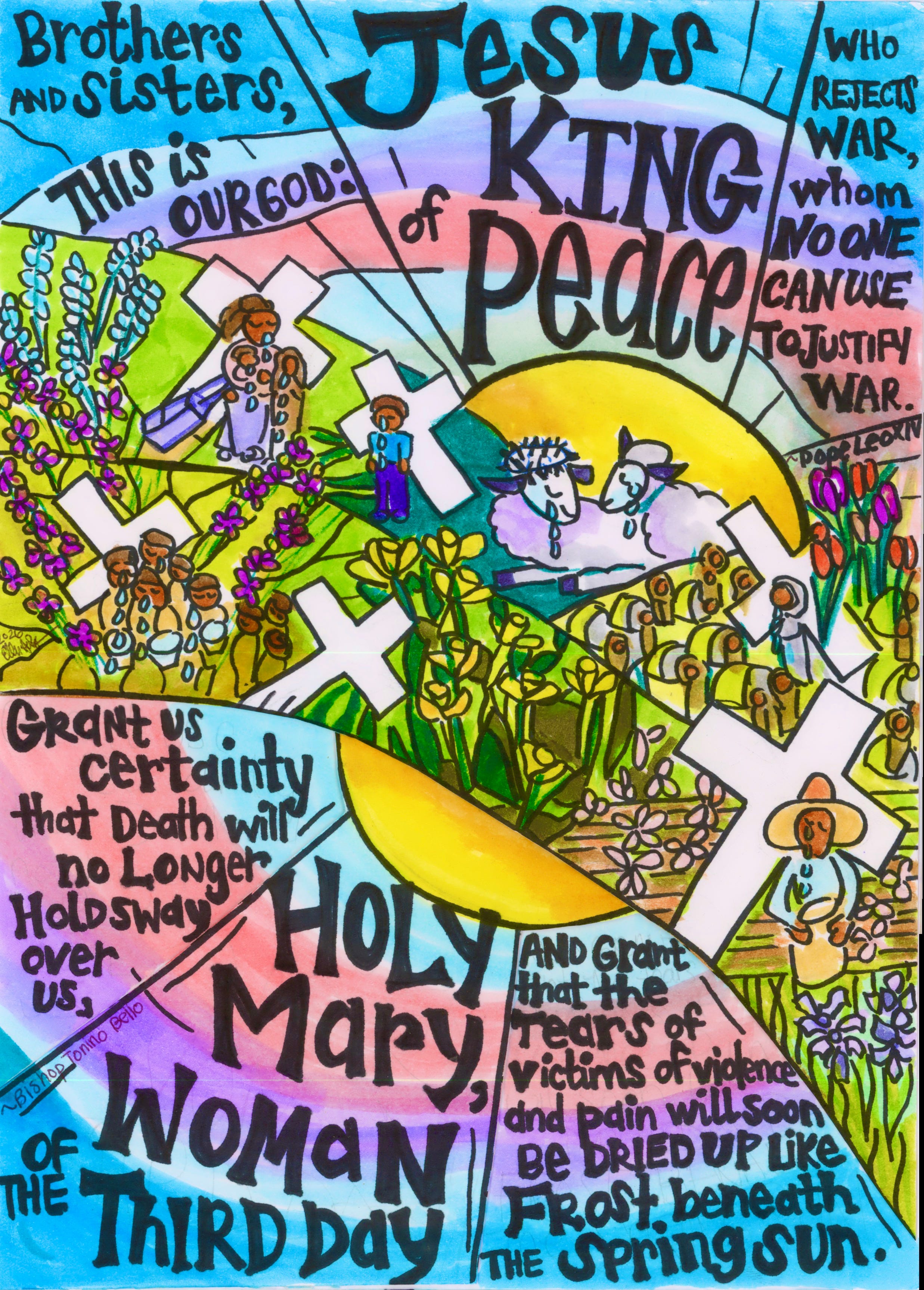
By Edward Speed
In the days following the U.S. attacks on Iran, I was struck most by how sterile it all sounds.
We hear about targets, tactics, blast zones, and precision strikes, capabilities degraded and strategic assets eliminated. War is discussed as if it were primarily an engineering problem.
Then the conversation quickly shifted. Within hours the focus moved to economic impact, the safety of shipping lanes, and what might happen to oil and gas prices. The conflict begins to be measured largely through the lens of supply chains and energy costs.
But something important can quietly disappear when war is discussed primarily in those terms.
Behind every “target” there are human bodies.
Behind every blast zone are people who woke up that morning, drank coffee, worried about their children, and went about the ordinary rhythms of life.
The language we use can create a kind of distance, as if what is happening were theoretical rather than something that tears into flesh and bone.
Before my life in finance and then theology, I was trained as an armor officer in the U.S. Army. I learned to use tank weapons designed not only to destroy but to, maim, wound and terrify. We trained with white phosphorus rounds that burn white hot and cling agonizingly to human flesh and with “flechette” rounds, which are anti-personnel “munitions,” carrying thousands of tiny steel darts, designed to shred human flesh. In live fire tank exercises the practice targets for those rounds were clusters of human silhouettes. The lesson was unmistakable.
Through grace and timing between wars, I never had to put another human being in my sights nor give the order for my tank company to fire.
When I hear the clinical language of modern warfare, I cannot hear it simply as strategy. I know, at least in some small way, what those weapons do to the human body.
Lately, I find myself thinking about all of this through the language of faith. St. Paul writes that when one member of the Body suffers, all suffer together. For much of my life, that line sounded poetic but distant. It was a line Dorothy Day repeated in her writing more than a dozen times.
Most of us will never experience the torn flesh of war ourselves. But if Paul’s image is true, the suffering still reverberates through the whole Body. These days it no longer feels distant. It has become a deep spiritual ache.
What worries me is how easily we can become immune to it. The language of strategy, markets, and geopolitics slowly numbs us.
Lately, the suffering of others no longer feels abstract to me. It feels like a wound carried somewhere within the Body to which we all belong.
And that leaves me with a simple prayer: that God would have mercy on the wounded members of his Body; and that he would keep our hearts, especially mine, from becoming immune to their suffering.

Edward Speed holds a master’s degree in theology, is a former chair of the St. Mary’s Board of Trustees, a retired CEO of a credit union and a Vietnam era veteran. He is now a volunteer at the San Antonio Catholic Worker.
Inspiring truth