

Catholic Workers Protest ICE
Escucha Mi Voz gathers dozens for protection at ICE check-ins; Michele Naar-Obed challenges us to find our place in the Nativity story unfolding today; London CWs call for prophetic response to empire


A few pressing questions, in light of recent developments…

What do you do when the men who are sworn to serve and protect the people instead, on a bright blue January day, shoot an innocent woman—a daughter, mother, poet, and protector—not once, not twice, but three times?
What do you do when the woman overseeing these men takes the truth, shakes it to pieces, and reassembles it upside down and inside out?
What do you do when the same men—these men who are sworn to serve and protect—turn around and, a few miles away, invade the grounds of a school, carrying automatic weapons, firing pepper spray canisters, tackling employees and assaulting students?

What do you do, friends, when your head of state blesses all of this? When he says, without blinking or blushing, that his own morality, his own mind, “is the only thing that can stop me”? This mighty, marvelous man, unconstrained by God, who will raid, rule, and ruin whatever gleaming land of gold or glaciers catches his eye on some dark Tuesday?
What will we do, friends, having woken up to find that our Empire has turned against us?
Forty days after he was executed by the Empire (then gave it the slip), the Lord told his friends to be on the watch for God’s great gift of the Holy Spirit.
“But when will our nation be restored to power?” they wanted to know.
“Like I said before,” the Lord said, “be awake to the workings of the Holy Spirit; and by the way, think bigger than your little nation, okay?”
So, what will we do? Will we grasp at the restoration of the old order, or will we wait for the Holy Spirit, whose designs are so much bigger than our own?
—Jerry
P. S. Obviously, we’re back from break, and we have a lot of news to share…the good kind, about people caring for one another. So much good news, in fact, that if you are reading this in your email, you may need to click through to the web version. Welcome back! And how has your 2026 been going so far?
Special Note: This Sunday marks the second anniversary of the Roundtable newsletter…and that means it’s time for our annual reader survey! Don’t worry, it’s only five questions.
Thanks, everyone, for your support and encouragement over the past two years.
Renee and Jerry

FEATURED
CW Reads: No More Empty Mangers
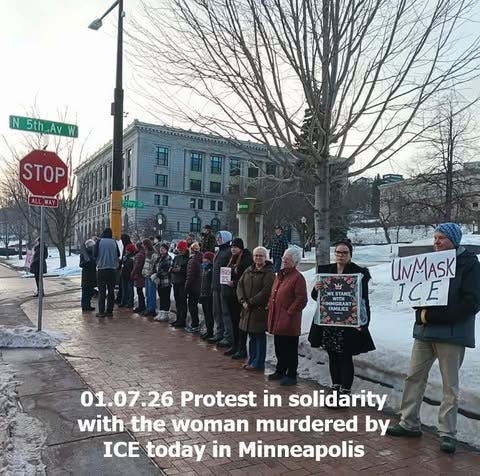
Michele Naar-Obed wrote about her community’s preparations to support immigrants in Minnesota before the federal government deployed 2,000 ICE agents to Minneapolis on Monday. Michele wrote her essay for Roundtable before an ICE agent shot Renee Nicole Good, 37, point-blank as she apparently attempted to drive away in her car. Yet Michele’s challenge to readers is even more poignant in the light of the violence and mourning in Minneapolis. She writes:
Will we be wise enough and have the courage to ignore the King’s order to report back and snitch on the Holy Family? […] Will we be like the angel who warns the Holy Ones that orders have been given to wipe them out? Will we be the ones to help them to find safety and help keep them safe until our country can return to its senses?
Read Michele’s essay here.
CW Reads: We Need Prophetic Tears In the Face of Empire
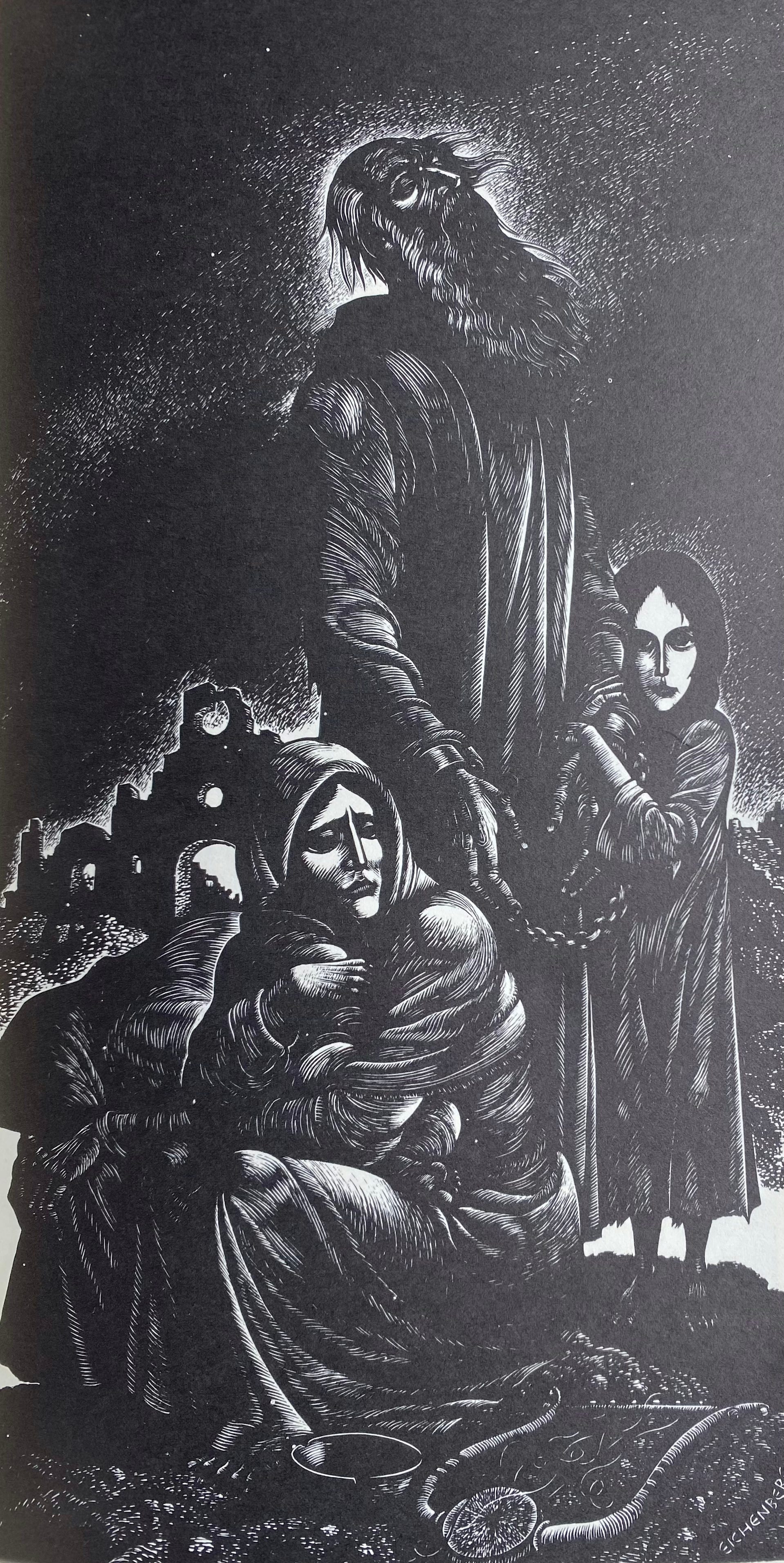
On Friday, CW Reads shared two essays from the London Catholic Worker’s December 2025 issue. One, by Francisco Leitão writes about cultivating a prophetic response to the migrant crisis. He writes:
The current refugee crisis, with all its frantic political posturing, is only the visible fracture of a world already cracking at its foundations. It’s a symptom of a much deeper problem that we haven’t begun to reckon with, of an old world order straining towards its end. But make no mistake: Until that end comes, our leaders, like the royals at the time of Jeremiah, will ignore it. Like Herod, they will anxiously attempt to preserve things the way they have always been; and they won’t shy away from the most brutal violence to hold on to the old ways.
So, like Matthew, we too must enter into a battle for memory, for deciding what we should remember, what binds us as a community, and what answers we give to the questions of who we are, where we come from and where we’re going. And so we remember the lives of all the victims of our fortress policies.
Thomas Frost writes about Dilexi Te, and the Gospel it preaches of Christ as the poor man. A Gospel we forget “at our peril.” He quotes Pope Leo XIV:
For this reason, the Church has always recognized in migrants a living presence of the Lord who, on the day of judgment, will say to those on his right: “I was a stranger and you welcomed me.” (DT, 73)
We ignore this at our peril. A genuinely Christian country would regard migrants as part of the Body of Christ and act accordingly. We would have to recognise a vision of the common good which genuinely included all of the people whom God has given us to love as our neighbours, which is everybody. Those who migrate, especially those who do so illegally, are doing us a valuable service. They are insisting on their own dignity, and their concomitant right to a decent life, against everything the modern nation state can throw at them. We should follow them in insisting on human dignity ourselves.
Let us thank God that he has chosen to reveal himself in the poor, so that in enacting justice we come closer to him.
You can read Francisco’s and Thomas’ full essays here.
Bonus Essay: Harry Will’s essay on the Three Kings from the Christmas 2025 issue was re-shared in Independent Catholic News. “We are told of 'Magi from the east'. Men from a different country, religion, and language, and who were widely suspected of sorcery. And yet there was something more important than their differences that brought them to the hospitality of a poor Hebrew family in Bethlehem,” Wills writes. You can read that here.
CW Reads: Commemorating Two Deaths
The New York Catholic Worker community lost two long-time community members, both of whom were eulogized in the December issue of The Catholic Worker. One, as T. Christopher Cornell writes of his mother, Monica, was a not a “high-profile personality” but rather one who “keeps things going behind the scenes.”
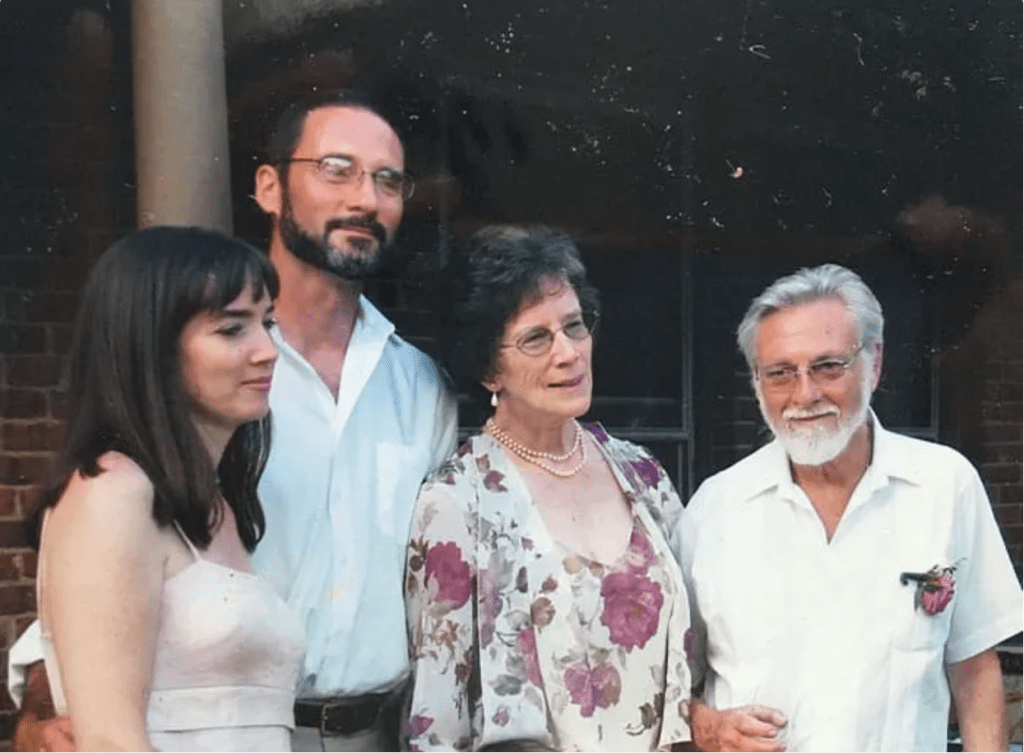
Monica Cornell joined the Catholic Worker in New York in `1963, but, 30 years later, their family struck out on a venture that, her son writes, spoke to her vocation in a particular way:
In 1993, Monica and Tom returned to the New York Catholic Worker at Peter Maurin Farm in Marlboro. Monica had always been a fan of Peter Maurin, his Easy Essays, and the entire idea of going back to the land as a return to Christ. She, too, yearned for a society built on small crafts, voluntary associations, and labor as gift. Reflecting on the last thirty-two years, it seems to me that her time at the farm was an expression of her own convictions as well as Peter’s. To practice frugality and thrift for the sake of peace and justice, and yet to live well, was the craft she had been developing since that day in 1963. Cooking, cleaning, mending, sewing, growing food and flowers, dealing with people, welcoming visitors, maintaining faithful correspondence with old friends, while having time for one’s interior life-when viewed as a whole, these integrated acts of skill, concentration and perseverance become the central, most essential craft of all. “Hospitality is my vocation,” she told Jack Doyle, who accompanied us during the final months.
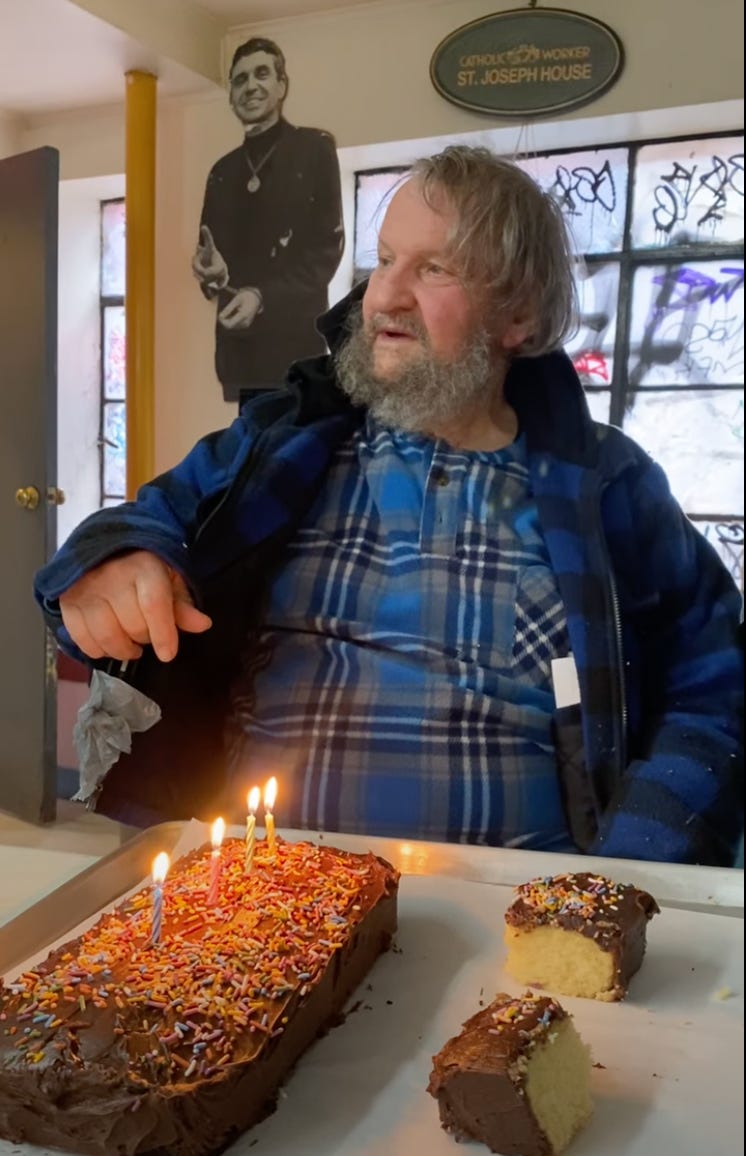
Also in this issue, former Maryhouse chaplain Geoffrey Gneuhs memorializes Eugene Solt, whose personality could certainly be described as high-profile. Everyone knew him, everyone loved Eugene, even when annoyed at his hijinks. Gneuhs writes:
His presence filled the room. Visitors were always amused with him, even mesmerized (although for some living in the house 24/7 he tested their patience). Eugene had a way with words and wordplay. I loved to engage him. He was not a conversationalist, although he would have liked that “ten-dollar word,” he would say, and put out his hand and give me a hearty, strong handshake. He made me and others laugh. I recall the writer Umberto Eco’s observation that “laughter is the basis of freedom”—and Eugene was a free spirit.
Read Monica and Eugene’s obituaries here.
New on CW.org: The Nine Provocations of Dorothy Day
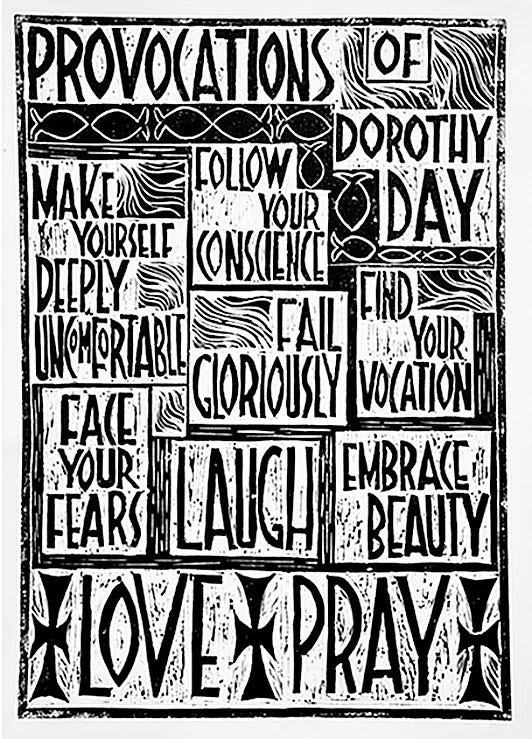
If you haven’t yet read Kate Hennessy’s essay, “The Nine Provocations of Dorothy Day,” you can now find the entire essay on CatholicWorker.org. First published in the Catholic newspaper, The Tablet, in 2023, the essay has been incorporated into the “About Dorothy” section of CatholicWorker.org to make it more accessible to the thousands of students and scholars who use the website to research Dorothy Day and the Catholic Worker movement every month.
In the essay, Hennessy explores Dorothy’s “provocations”—or radical teachings—that continue to challenge and unsettle people today. Drawing from personal memories, family stories, and Dorothy’s own diaries, Hennessy identifies nine major themes—including the call to make oneself deeply uncomfortable, the primacy of conscience, and the courage to “fail gloriously.”
This essay is not a set of instructions, but a map for a “revolution of the heart.” It invites readers to stop merely studying Dorothy Day and to instead allow her witness to “crack wide your heart” and transform your life.
“I have come to believe there is little point in simply admiring Dorothy Day. If you’re going to pay attention to her, your life will be turned on its head,” Hennessy writes:
When Dorothy died people wondered if the Catholic Worker movement would survive her passing. The CW is celebrating its 90th anniversary this year—I think that question can be laid to rest. A better question to ask now is what is she still teaching us? I have—daringly—identified nine major teachings, which I have referred to as consolations, lamentations, or ruinations, but most commonly “provocations.” These are not rules or step-by-step instructions. They are more akin to adding ingredients to a soup, or a weaving of intertwining threads, and I may be doing a disservice by putting them in some kind of order.
I can’t claim to know much about each provocation, and I have many more questions than answers. Dorothy spoke of the mystery of our freedom—one of the greatest gifts God gave us, she said. She also said that we struggle against both freedom and responsibility, and we always will. There is no point in telling people what to do. It has to be a revolution from within, a revolution of the heart. I do see the provocations as an alternative to anger, lethargy, despair, helplessness, or, worst of all, indifference. They are a practice and a map to a path you must forge for yourself.
Read the full essay at CatholicWorker.org.
COMMUNITY NEWS & NEWSLETTERS
Catholic Workers Call for End of ICE, Mourn Renee Good


Catholic Workers across the country protested and held vigil in response to ICE’s violence in Minneapolis and in memory of Renee Nicole Good. The St. Louis Catholic Worker shared an image on Facebook from the St. Louis protest on January 9 they participated in, undettered, despite the rain. The Rechabite Catholic Worker in Lancaster, Pennsylvania, held a vigil. Sean Domencic reported that the crowd at the vigil he described as “very cold, wet and last minute,” numbered only five, but he found the experience moving. “We prayed the Litany of the Saints, a Sorrowful Rosary, and several hymns along with extemporaneous prayer,” Domencic told Roundtable in an email. “Particularly touching was a woman who bought a flower from Central Market across the street to lay at the foot of the Cross in honor of Renee Good,” he wrote.
Catholic Workers Protest Nuclear Mission at Offutt Air Force Base

Catholic Workers and friends from Wisconsin, Iowa, and Nebraska held a demonstration at the headquarters of the United States Strategic Command at Offutt Air Force Base near Omaha on December 27. The demonstration occurred on the eve of the Feast of the Holy Innocents. In an email to Roundtable, Brian Terrell (Strangers and Guests, Maloy, Iowa) noted that USSTRATCOM’s mission includes employing “nuclear, cyber, global strike, joint electronic warfare, missile defense, and intelligence capabilities to deter aggression” and to “decisively and accurately respond if deterrence fails.” Terrell observed that if conventional approaches fail, USSTRATCOM pledges to “defeat terror and define the force of the future by killing most living beings on this planet.” Among those present was Cassandra Dixon of Mary House Catholic Worker in Wisconsin Dells.
New Catholic Worker in Georgia Opens “Dot’s Place” Soup Kitchen
The latest newsletter of the Columbus (Georgia) Catholic Worker Community announces the opening of their soup kitchen, “Dot’s Place,” which will begin serving lunch on January 17 at St. Mary Magdalene Episcopal Church. The kitchen will operate every other Saturday from 11:00 a.m. to 1:00 p.m., with plans to expand to weekly service as soon as possible. The pastor at St. Mary Magdalene’s welcomed the community to use the church’s kitchen and parish hall after hosting their November grocery giveaway.
The community also continues its weekly Saturday morning vigil for immigrant rights at Manchester and Armour streets, where they have stood for the past seven months. The newsletter features a short piece titled “A Holy Bag of Doritos” about a young Hispanic boy who offered his bag of chips to vigil participants:
A young Hispanic lad clutching a bag of Doritos, (the size you pick up at the gas station markets) followed by his father, came walking over to us. He was probably 6 or 7, and had maybe read our signs or his father explained what we were doing, but the look on his face told us, he knew fear….
The young lad came up to me and said, “Would you like some Doritos?”. (When I was his age, I would never have given away my bag of chips). He held the bag of chips to me, a gift of love and thanks. I took the gift and said thank you and he headed back to his father. This gift given, expecting nothing in return, a holy gift of Doritos!
Read the entire newsletter here or reach out to the community: muscadinecw@yahoo.com.
Massachusetts Catholic Worker and Eco-Village Seeks Volunteers
Samantha and Brian Ashmankas of Makarioi Catholic Worker Farm and Eco-Village in Webster, Massachusetts, are seeking Catholic Workers interested in sharing ownership or renting space in their Catholic Worker house of hospitality. They write:
We are seeking single or coupled people who are interested in renting a room and/or buying a share of the house. The arrangement of the house includes a combination of private spaces and shared spaces. Our vision is to build a life of prayer, prophetic witness, and care for our “common home” through the values of social justice, sustainability, healing, and spirituality.
Mosaic Commons is a thriving community itself which consists of a rich network of neighbors who love and support one another through shared meals, shared time, shared skills among other supports.
Learn more about their community and get in touch here.
Casa Maria Catholic Worker Releases January Newsletter
Casa Maria Catholic Worker in Milwaukee, Wisconsin, has released its January newsletter, which is full of interesting facts as well as Don’s jokes. You can access it here.
Lydia’s House Celebrates Christmas; Welcomes Babies
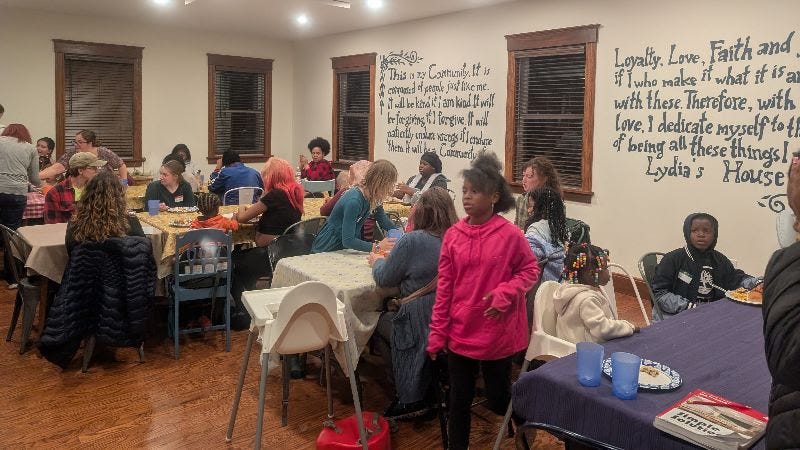
Lydia’s House (Cincinnati, Ohio) shared photos from its Christmas celebrations in its latest email. They write:
Our shelter house remained full with 6 families, we welcomed 2 new babies in house and one in our extended community, and our daycare continued with new themes each week and a growing crew of employees.
Learn more about the community on their website.
CW IN THE MEDIA
ICE Accompaniment Program Mobilizes 100+ Supporters
The Iowa City Catholic Worker organized a mass accompaniment action on January 7, bringing together over 100 community members to escort 11 immigrant families to ICE check-ins. In an email, the community stated that accompaniment is “one of the most effective ways we interrupt fear and isolation” in immigrant communities.”
Meanwhile, Escucha Mi Voz Iowa, a companion organization to the Iowa City Catholic Worker, released a statement condemning the January 7 killing of Renee Good in Minneapolis:
The ICE killing of a legal observer in Minneapolis is the direct result of the authoritarian agenda driven by Donald Trump and enabled by Ashley Hinson and Mariannette Miller-Meeks. Their actions unleashed ICE to terrorize communities with impunity, making this death the predictable outcome of a violent deportation system they deliberately expanded and defended.
The organization went on to declare that the group “refuse[s] to accept this violence as normal” and will “confront authoritarianism, defend one another, and build power until ICE is out of our communities and every worker and resident can live with safety, dignity, and justice.”
Haley House Volunteer Shares Story of Edward, a Guest Who Came in With a Blizzard
Dave Manzo shares a personal essay in the Dorchester Reporter about Edward, a guest at Haley House in Boston in the 1970s, who came in for shelter after sleeping outside in a cardboard box. Edward would only sleep on the cold tile of the soup kitchen floor, Manzo writes, after finally being convinced to come indoors during the blizzard of 1978 that killed 99 people in Boston. Manzo writes:
Edward’s greatest gift was his kindness toward the young people who lived near Haley House. The mail slot at Kathe McKenna’s home across the street from Haley House often included a note for her four-year-old daughter from Edward.
Yet, the mental illness demons never quit. One Saturday morning, an FBI agent named McCarthy appeared at Haley House answering Edward’s complaint. After a brief conversation with him, the agent left, having assessed that Edward’s description of us as “a bunch of subversives” did not merit the FBI’s attention. We breathed a sigh of relief.
Manzo describes his encounter with the warm, life-saving love of community as a “thin place,” a word in Celtic spirituality for where the spiritual world is close to the material world, peeking through the veil.
Maybe there are thin places, moments where heaven and earth seem closer, where it is easier to feel God’s presence. I did not expect to find it in a blizzard nearly 50 years ago watching my housemates save Edward’s life.
Jeanne recently reflected on her efforts to coax Edward inside saying, “Annie and I gave each other the courage we did not have separately and that is truly the power of community.”
Read the full story here.
Rev. Lumpkin to Retire After Serving the Hungry for Half a Century
After nearly 50 years of feeding the hungry in Detroit's historic Corktown neighborhood, Father Tom Lumpkin and Marianne Arbogast are retiring as co-managers of Manna Meal, a soup kitchen operating in the lower level of St. Peter's Episcopal Church since 1976. The pair established what Father Tom describes as "a second Catholic Worker house, soup kitchen, shelter in this area," motivated by the Gospel mandate from Matthew 25. "There's a scene at The Last Judgment, where Jesus says to people, 'I was hungry, and you fed me naked, and you clothed me as a stranger, and you welcomed me,'" Arbogast reflects. "And that, that, to me, is kind of the core of what faith is about." At 87, Father Tom says he's learned compassion above all through this work: "I'm trying to do a little bit to make life here on earth a little more like heaven and a little less like hell for people who aren't doing well." Though Lumpkin and Arbogast are stepping down, Manna Meal will continue serving the community. Read more at CBS News Detroit.
Ellsberg Discusses Saints and Dorothy Day
Orbis Books publisher and editor-in-chief Robert Ellsberg appeared on “The Nonviolent Jesus Podcast” hosted by John Dear to discuss his latest book, Blessed Among Us: Day by Day with Saintly Witnesses, Vol. 2. The book features short biographical descriptions of hundreds of saints, prophets, and witnesses.
Ellsberg, who was also editor of The Catholic Worker in the 1970s, told Dear that “Dorothy Day said the saints were here to change the social order, not just minister to the people.” He explained that Day “tried to practice the presence of God and the path to holiness through a social dimension, the power of small gestures, as well as small protest.” Listen to the full conversation on The Nonviolent Jesus Podcast.
Catholic Worker Reminds Author to Foster “Joy of the Gospel”
Don Clemmer, editor of Connections, the magazine of NETWORK, a D.C.-based Catholic lobbying group for social justice, wrote an essay for U.S. Catholic about seeking joy, even as he, along with the rest of the country, bore witness to growing authoritarianism. He writes about wrestling with trusting God in the midst of this darkness and how a talk by a Catholic Worker helped ground him. Clemmer writes:
Was I watching the annihilation of our government’s capacity to do good, while masked thugs terrorized communities, and saying, “Sorry, God, I don’t trust in your goodness and grace if we don’t ensure it ourselves”? But then it occurred to me: God gave us the agency to respond to the world in whatever way we like. Why not use it to create joy? I can worry about the world my children will inherit and also enjoy our time together now.
Margaret Pfeil of the South Bend Catholic Worker, in a beautiful talk, reflected on how Dorothy Day believed enjoyment of the material world can lead to a deeper mystical encounter with God. I might not usually picture the stern, gaunt founder of a movement defined by simple living as an advocate for material enjoyment. But Pfeil explained it’s about finding God’s grace in the individual moment and then letting that experience guide us—or even pull us—into a wider sense of awareness and gratitude for God.
Read the full essay in U.S. Catholic.
How Dorothy Day Used Hospitality to Connect to the Other
Marty Tomszak’s 2023 book Political Theology Based in Community: Dorothy Day, the Catholic Worker Movement, and Overcoming Otherness explores hospitality as a way to connect to the Other and the divine, according to a recent review by Lincoln Rice (Casa Maria Catholic Worker, Milwaukee, Wisconsin) in the latest issue of Journal of Moral Theology. The review notes that Tomszak’s work is “deeply indebted to the personalism of both Jacques Maritain and Emmanuel Mounier” and demonstrates how Dorothy Day took personalist philosophy beyond theory by “also sharing physical space with the Other.” The full review is available in Journal of Moral Theology 15, no. 1 (2026).
Day Inspires Fight Against Oligarchy
Writing in Counter Punch, David S. D’Amato writes of the interest in Dorothy Day and her anarchism. He writes of her critique of liberal statism, coercion, and wealth-building, and of alt-right love of fascism. D’Amato says:
There may be no starker contrast to the hollow identitarian blather of our moment than the life and work of Dorothy Day. Today’s hideous and embarrassing elite-worship, its obsessions with maximums of speed and scale regardless of the social dangers or consequences, its institutional detachment and opacity, and its counterproductive GDPism all represent pervasive social decay and alienation within Day’s philosophy.
Read the full essay here.
Catholic Worker Commemorated in Year-End Memorial
Catholic News Agency’s list of notable Catholics who died in 2025 included Sr. JoAnn Persch who died in November 2025 at the age of 91. Sr. Persch co-founded Su Casa Catholic Worker in Chicago in 1990 with Sr. Pat Murphy, who also died in July of last year. Su Casa was dedicated to serving refugees and survivors of torture from Central America. CNA notes Sr. Persch’s life-long commitment to migrants and refugees continued to the very end of her life:
Two weeks before her death, Persch attempted to bring Communion to detainees at the Broadview, Illinois, Immigration and Customs Enforcement (ICE) facility where for decades the Sisters of Mercy ministered to migrants and refugees. Officials denied her entry.
Read more on CNA’s website here.
Catholic Worker Dies in Sacramento
Barbara Ely Bird Berger, a speech pathologist and committed Catholic, died in December at the age of 92. She was involved in starting Sacramento’s first Catholic Worker House and was a committed volunteer at Loaves and Fishes in downtown Sacramento. She was involved in the United Farm Workers Boycott, according to her obituary, and in implementing the reforms of the Second Vatican Council at her parish. “In the 1980s, she was part of a community that revitalized the liturgical celebrations at St. Francis of Assisi Parish, where she participated in planning liturgies, made Communion bread, sang in the choir, and organized St. Francis Parish's alternative Christmas fair.”
Barbara was also a supporter of the United Farmworkers boycotts, involved in anti-nuclear protest, and was dedicated to the Sanctuary movement. You can read more about Barbara in her obituary here.
Briefly Noted: Former Site of Jubilee House for Sale
in Wausau, Wisconsin. The community started in a convent that belonged to Holy Name Parish in 2000. The Catholic Worker community relocated to the school property in question in 2013, which it then sold in 2025. Jubilee House again relocated to the Church of the Resurrection in Wausau earlier this year. Read more about their former property here.
MARK YOUR CALENDAR
Bokashi Demonstration at St. Martin de Porres Catholic Worker
Harrisburg, PA — St. Martin de Porres Catholic Worker in Harrisburg, Pennsylvania will be holding a learning session about the Bokashi method of compost on Thursday, January 15 at 7 p.m. Held at 1440 Market Street, the session will demonstrate how households can compost pretty much any food waste indoors with no smell and create nutritious soil for lawns or gardens in a matter of weeks. Learn more on their website.
Craft retreat at Strangers and Guests Catholic Worker
Maloy, Iowa—Thursday through Monday, January 15 to 19, Strangers and Guests Catholic Worker in Maloy, Iowa, is hosting a craft retreat. Betsy writes: “We are hoping to be able to gather folks who share a vision of life where work can be creative and good, enriching our living and sharing and celebrating. Our craft retreats can only happen through people’s willingness to teach, learn and share our food and skills, stories, music and prayer.” Since space is limited, reach out to Betsy Keenan of Strangers and Guests Catholic Worker at keenanweaving@yahoo.com if interested.
Little Platte CW Launches Annual Participatory Theater Celebration

Platteville, Wisconsin—The Little Platte Catholic Worker is launching its first annual participatory theatrical celebration, “Brigid’s Flame: A Tale of Spring,” on January 30-31, 2026, at Steeple Square in Dubuque, Iowa. The event, a project of the newly formed Groundswell Joy Collective (co-founded by Little Platter Allyson and community member Mary Kay), will feature community singing, dancing, storytelling, silence, and puppetry drawing on Irish myth and tradition to welcome spring, the growing light, and the feminine connection to land.
The celebration, led by community song leader Lyndsey Scott and supported by an Iowa Arts Council grant, incorporates what organizers call the “four universal healing salves” of song, story, dance, and silence. The entire Little Platte farm community is involved in the production, which includes puppet-making and art/set creation workdays held at the farm. Organizers hope to make Brigid’s Flame an annual community touchstone. Tickets are now on sale. Read the entire event announcement at Little Platte Catholic Worker’s Substack newsletter.
WORDS FROM THE ELDERS
“God will say, “Where are the Others?”
by Mark and Louise Zwick, from December 2007 issue of the Houston Catholic Worker.
People wonder about us working with people who may not have papers. But God seems to have placed us here in the midst of immigrants and refugees on pilgrimage. We, too, fled the war in El Salvador in 1977 with our children, with the same concern that so many migrants have about their children.
Our work with immigrants and refugees is our response to the question, “Where are the others?”
From the beginning of the journey, the immigrant or refugee almost immediately begins to lose his identity. He has no family to turn to; she doesn’t speak the language of the dominant culture; he frequently does not have an ID and may not have legal papers. Migrants are also almost impossible to find in the prison bureaucracy if they have been detained by the Immigration Enforcement and Customs Agency, now a part of the Department of Homeland Security.
Families are left to wonder forever what happened to their loved ones, sometimes fearing that they just went off in search of the American dream and abandoned their families. If immigrants and refugees knew the hazards of the journey, we doubt that many would come to try to find a better life.
On the other hand, there are beautiful stories of actually finding people that are a part of Casa Juan Diego from its earliest history. It has always been a joy to be able to help to answer the question, Where are the others?
Read the full article online at Casa Juan Diego’s website.